Courtney Rubin, The Weight-Loss Diaries
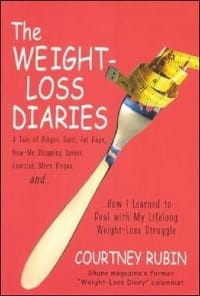
Courtney Rubin's The Weight-Loss Diaries is a behind-the-scenes account of her struggles with weight loss during the two years in which she wrote a column on the subject for Shape magazine. Rubin went into the project hoping that the public accountability would help her succeed in dieting where she had often failed before, but it turned out not to be a magic bullet. The scrutiny and the deadlines and the attention brought their own problems. As Rubin explains, she never became the "after" picture, but it still sounds to me like her experience was a success.
When she started the project, Rubin was not aware that her sometimes uncontrollable eating and her obsession with food actually qualified as an eating disorder, which is to say that they were symptoms of a recognized pattern of behavior and she was therefore not alone with her problem. Over the course of her stint as public dieter, she became more aware of why food was a problem in her life and thus better able to deal with it. Rubin also started exercising regularly during the same period, going so far as to actually complete a couple marathons. She was unhappy that this didn't translate into dramatic weight loss, but even if the scale stayed the same, incorporating regular exercise into her life was a huge plus.
Rubin is remarkably honest in the book, not only about her problem with food but also about her relationships with friends and family—which were, in fact, often affected by the food issue. In particular, she writes about her twin sister Diana. Though Rubin claims in her acknowledgments that their relationship has improved since the writing, Diana was for most of their lives a toxic influence on Rubin, sabotaging and humiliating her at every turn. Rubin's grandmother doesn't come off much better. It is too bad that she was immersed in this poisonous environment for so long, which made getting better more difficult (as did Rubin's job, which required that she often be out at bars and restaurants, where eating badly was far too easy).
I enjoyed Rubin's memoir for her honesty and also because she comes off as likable enough that you want her to succeed. And as I said, it seems to me that she did.
Member discussion