Antony Moore, The Swap
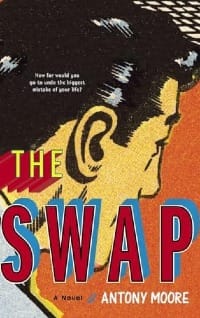
Harvey Briscow's life hasn't changed much in the last twenty years. He owns a comic book store in London and has one employee, apart from whom he has no meaningful relationships. He lives in a messy flat that he hasn't bothered to decorate—except for tacking up a few superhero posters—in fifteen years. He falls into bed drunk most nights. He's one of those men who's somehow failed to grow up, who stopped maturing emotionally when he was sixteen or seventeen. And for all of that time he's been nursing one regret, wishing one small moment from his past away: the day in 1982 when—half out of pity—he traded a first edition Superman One comic with the boy everyone picked on at school, Bleeder Odd, in exchange for a lousy piece of plastic. The comic wasn't worth much at the time, but now, as Harvey well knows, it could go for hundreds of thousands of dollars in mint condition. It would be fine if Harvey knew the comic had been destroyed decades before. He could get on with his life. It's the uncertainty that's killing him....
Harvey's 20th high-school reunion stirs up his one big regret anew, and he attends with the hope of running into Bleeder and finding out once and for all what happened to the comic. As it turns out, the reunion offers him far more than he could have anticipated—a lifetime's worth of dramatic events in the space of a few days. Among these is a highly unpleasant development that threatens to undermine Harvey's nascent chances for happiness. Unfortunately, Harvey has a peculiar way of making things much worse for himself the more he tries to extricate himself from difficulty.
Antony Moore's The Swap is a very funny book. It's also wonderfully plotted, a sort of Hitchcockian thriller—an average Joe unwittingly getting into very bad straits—with a comic twist. I do have two complaints. First, Harvey has a tendency to walk through events—indeed, through most of his life—in a fog, often alcohol-induced. This works in the novel most of the time, but at certain key dramatic points, Harvey's tendency to become distracted by the non-essential becomes hard to believe, which makes it difficult to suspend disbelief. The ending, too, is disappointing: without giving anything away, it seems to me that the author has taken the easy way out by not tying things up more cleverly. But these two concerns aside, I highly recommend this one.
Member discussion