Sheena Iyengar, The Art of Choosing
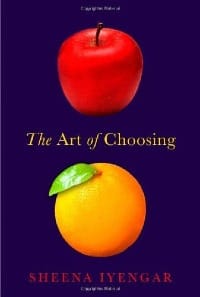
You may have heard about the jam study, which demonstrated that consumers who were confronted by a large array of jam jars were less likely to buy one than those presented with fewer options. The conclusion is appealing: anyone who's pondered the wide variety of toothpastes available these days, even just the variety within a single brand, has probably thought that the buying decision was being made unnecessarily complicated. Social psychologist Sheena Iyengar, a professor at Columbia University, was one of the authors of the jam study. In her book The Art of Choosing, she further explores the counterintuitive notion that, when it comes to choice, sometimes less is more. Iyengar discusses a great number of topics: how a lack of choice—or a perceived lack of choice—can be emotionally, physically, and psychologically damaging, how our choices are affected by advertisements or by what's available (for example, in the world of fashion), how confirmational biases work, how being responsible for a decision can lead to second-guessing and guilt.
The Art of Choosing is an interesting book, but it's not as accessible as some others that have aimed to present social psychology to a lay audience—Malcolm Gladwell's Blink, for example, or Dan Ariely's Predictably Irrational. Ms. Iyengar's prose is very clear, so that's not the problem. But after reading I often found I was not able to remember the main points of the chapter I'd just finished. I think I would have taken more away from the book if there were more hand-holding, summaries and reminders of what had already been covered, the sort of pointers that a speaker might throw into a talk to help his audience follow an oral argument. That, at least, was my experience, though other readers may not have the same trouble.
Member discussion