Ken Follett, Never
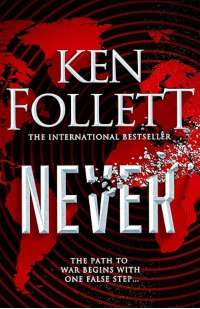
Well, Ken Follett's 800-page novel Never is unlike anything he's published before. Sure, it shares many traits with his earlier books—strong female characters and couples that overcome great hardship to be together, multiple storylines that somehow are never hard to follow. But in most of Follett's stories there are good guys and bad guys, and the line between the two is perfectly clear. The good guys ultimately win. True love prevails. Never tells a different kind of story. There are still some heroes and some unambiguously bad guys, but mostly the characters inhabit a gray middle ground. They're people who are doing the best they can in circumstances they can't control. Follett tells his story from multiple points of view—an American spy undercover in the desert, the President, a Chinese intelligence officer, et al. But there's a lot of information that has to be delivered to move the story forward, and some of Follett's narratives bear more of the weight of delivering that information. They are as a result less fun to read: Give me a romance in the African desert over political machinations in China any day. So, on the one hand, Never is a more serious story than the author's previous books. Really bad things happen in a progression that seems plausible, and the characters living through those bad things are more realistic. All of which is laudable, but that doesn't mean I have to like it. The book was good, but I prefer Follett's usual fare.
Member discussion