Katherine Weber, Objects in Mirror Are Closer Than They Appear
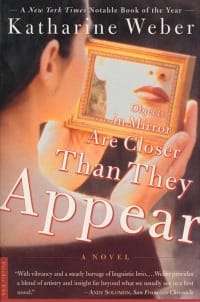
Photographer Harriet Rose, in Geneva for a month on a travel fellowship, is staying with her former roommate Anne, who had left their Greenwich Village apartment to follow her recently acquired married lover to Switzerland. Harriet finds Anne, this "strange new mistress-person" she's become, wholly changed from the woman she knew in New York, smothering under the demands of an oppressive relationship with her Victor, a fastidious, subtly abusive, toeless Auschwitz survivor. In a journal addressed to—but not necessarily intended to be read by—her new boyfriend Benedict, Harriet chronicles the absurd and dark relationship she is forced to witness at close quarters. Happily, she is an excellent observer of minutiae and a witty reporter. Of a dinner out with the unhappy couple, for example, Harriet writes:
"'I will take the steak,' Victor said to the waiter—rather imperiously, I thought. Why did it bother me so? I will take the steak. I have no toes, so I will not merely have, as others do, but I will take. I survived Auschwitz, so I can cheat on my wife and I will take the steak."
The first part of Katharine Weber's Objects in Mirror Are Closer Than They Appear, then, is epistolary, the stories of Anne and Harriet told by the latter in a series of lengthy, nicely written letters. In the remaining two-thirds of the book, related in third-person prose, Harriet's back story is fleshed out—her privileged but profoundly sad childhood, with its parallels to her current situation. Finally, the story having returned to the present day, Anne's relationship with the enigmatic Victor meets its greatest challenge.
Objects in Mirror are Closer than they Appear is a wonderful book, layered, poignant, and beautifully written, and it comes highly recommended.
Member discussion