Dan Brown, The DaVinci Code
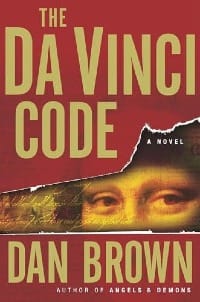
On the first page of The DaVinci Code, the seventy-six-year-old curator of the Louvre, Jacques Sauniere, staggers into the museum's Grand Gallery, tears a Caravaggio off the wall, and collapses backward onto the room's intricate parquet floor. At once an alarm sounds, triggered by the painting's removal, and an iron gate falls shut, sealing the Gallery off from the rest of the museum and separating Sauniere from his attacker.
In the brief interval between his deliberate self-imprisonment and his death, Sauniere constructs an elaborate cipher and, ingeniously, handpicks the individuals who will undertake its solution. French cryptologist Sophie Neveu and Robert Langdon, a Harvard professor and symbologist, must unravel the riddle of the curator's dying message. The path Sauniere sets the two on leads to a series of equally ingenious puzzles and involves them in a historical conspiracy. Wanted by the police, Neveu and Langdon are also shadowed by Sauniere's killer and by the elusive figure who directs him.
As the above summary may suggest, the plot of The DaVinci Code is a complex one, and Brown must impart a great deal of detailed, near scholarly information to readers to make his story comprehensible. But to the author's great credit, the requisite information—about Leonardo DaVinci, or the Knights Templar, or the devout Catholic sect Opus Dei—is delivered at precisely the right moments in the story, and in the right doses, so that the reader is never overwhelmed by it. The plotting of the book, too, is masterful: Brown doles out his revelations so the reader is left wanting more after every bite-sized chapter. The book's characters, particularly the renaissance man Sauniere, are intriguing and likeable. In short, The DaVinci Code is a perfect, riveting novel that will grab you in its first paragraph and keep you reading late into the night.
Member discussion