Steve Almond, Candy Freak
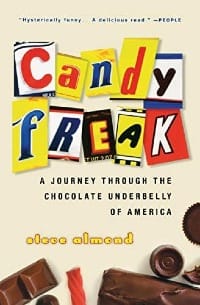
The aptly-named Steve Almond, a self-described candy freak, is a life-long candy connoisseur who has probably sampled more different types of candy bars than most of us have ever seen. He is wont to describe their peculiar pleasures in nearly sensual prose. Almond's book, Candy Freak, is an exploration of candy—the story of his tour of a number of mostly smaller candy factories, including profiles of the candy men and women he met along the way and brief histories of the businesses he visited. One leaves the book with some appreciation of the history and current state of the candy industry: how in candy's "golden age" a host of different candies were being produced regionally; how many smaller businesses have since either failed or were gobbled up by the larger candy concerns; how those that remain find it nearly impossible to compete against the likes of Hershey or Mars. (An interesting point Almond makes about the golden age, though, is that "very few people actually experienced it in real time." That is, although country-wide there existed a vast array of candy types—more so than exist now—most people could only have experience of the candies available to them locally; ironically, then, the average person today has access to more different types of candy.)
Almond's book is interesting, and I'm happy to have read it, but it's not wholly successful. For one thing, it's not always easy to visualize the machines and mechanical processes he spends so much time describing—the enrobers and roasters and starch moguls and whippers and depositors—though doubtless they'd be fascinating to see in person or as part of a documentary. After a while, too, one candy factory begins to sound very much like another, particularly when you've never heard of the bars being produced in them: the Valomilk or Idaho Spud, the Old Faithful or the GooGoo Cluster or the Abba-Zaba. Then there's the weird personal stuff. Almond's book is part memoir: Candy, Almond writes, "had been my only dependable succor as a child" and "had, in a sense, saved my life...." But I didn't feel like I'd bonded with Almond early on in the book, so later, when he starts throwing some fairly serious personal information into the mix (depression, a cancer scare), it felt out of place. As did the handful of political comments he makes and his description of a marijuana-laced tasting party he threw post candy factory tour. Some of this stuff should have been edited out before it ever hit print. A shorter book would have resulted, as they apparently say in the candy business, in a better finish.
Member discussion