Stephenie Meyer, Breaking Dawn
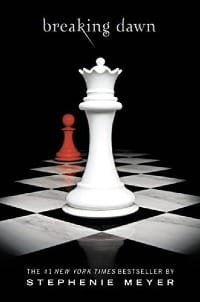
The publication of Breaking Dawn, the fourth book in Stephenie Meyer's vampire saga, was met with a firestorm of protest in some quarters. Disgruntled readers, unhappy with the direction the story takes in book four, tried to organize a campaign against the book, urging others who were unhappy with the novel after reading it to return it. The strategy would effectively rob Meyer and her publisher of royalties that they had earned legitimately from the book's sale. The response, a bit of childish foot-stamping, is ridiculous: readers aren't guaranteed a plot that pleases them or their money back. And the protesters' desire to punish Meyer—an author who had presumably pleased them over the course of the series' first 1800-odd pages—is mean-spirited and distasteful.
The response is also difficult to understand. Breaking Dawn offers the most exciting plot of the tetralogy, and it ties the story together nicely. The book's conclusion is both satisfying and sensible. And the book is at least as well-written as previous installments in the series: that is, if readers didn't enjoy Meyer's prose in the first place, they shouldn't have made it as far as book four to complain about it.
In some ways, the relationships in the book evolve along old-fashioned lines. A soap opera's worth of modern-day issues are addressed in the midst of a vampire's coven, but in the end, life is defended against darkness; love and the conventions of marriage triumph; and familial bonds are strengthened. It's just that the family that forms in these pages is an untraditional one. This is all very vague, as summaries go, but I don't want to give anything away. In short, I think Breaking Dawn is the best book in Meyer's series. Don't let the fringe lunatics dissuade you from giving it a shot.
Member discussion