Craig Ferguson, American On Purpose
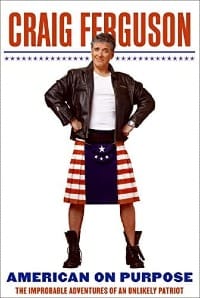
In his memoir American On Purpose, Craig Ferguson tells the story of his life from his childhood in Glasgow to his current job as host of The Late Late Show on CBS. There are three strands to the story: Ferguson's hesitant, sometimes almost accidental forays into show business; his drug use and alcohol addiction and ultimate recovery from alcoholism; and, as the book's title suggests, his desire to live in and eventually to become a citizen of the United States. The book's focus is mostly on the first two of these, despite the book's title and the publisher's copy, which seems to be describing a different book: "In American on Purpose, Craig Ferguson talks a red, white, and blue streak about everything our Founding Fathers feared."
I had mixed feelings about the book. Certainly Ferguson is a likable guy—at least since he's been sober—and he never blames anyone but himself for his bad behavior, which is commendable. He's supportive of friends. He doesn't have any complaints about his parents. (Though he does have some harsh words for the Glaswegian school system of his youth, which sounds horrific.) The problem is that the book bogs down in detail as Ferguson describes the people he worked with or got drunk with or otherwise socialized with along the way. Here he is, for example, describing the opening night of the American Modern Dance Theater's production of "Telemachus Clay," in which he appeared:
"The first night was fun, though. James and Susan came in from the burbs, Anne was there of course, and also Jamesy and his junkie wife, Lucy—who had taken to talking to me a little more since she realized I was in a play. Roswell and a couple of guys from the construction site showed up. So did the painter Steven Campbell from Glasgow, who was causing quite a stir in the New York art world at the time. Anne had been friendly with him and his wife, Carol, at art school but it was a tricky social situation. Steven loathed cocaine and had absolutely no time for Jamesy, another classmate at the Glasgow School of Art, whom Steven dismissed as a worthless trendy. It was an unfair assessment, and Steven could be a pretty opinionated guy."
This works as a point-by-point description of what was going on, but it makes for dull reading. We never care about these minor characters, and they all blend together after a while. The book does pick up a bit after Ferguson gets sober and starts to appear on American television, and there are certainly some moving moments in the book. But it's not as interesting a read as it should have been given the author's personality and story and talent.
Member discussion