Alice Sebold, The Almost Moon
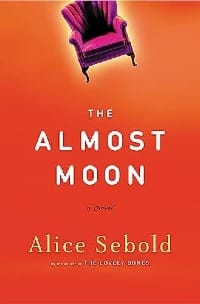
Alice Sebold's The Almost Moon starts with a murder, a clumsy, unpremeditated affair that happens almost naturally. It was easy, Helen Knightly tells us in the book's first sentence:
"When all is said and done, killing my mother came easily."
It's a sentence that makes you want to read more. The book continues:
"Dementia, as it descends, has a way of revealing the core of the person affected by it. My mother's core was rotten like the brackish water at the bottom of a weeks-old vase of flowers. She had been beautiful when my father met her and still capable of love when I became their late-in-life child, but by the time she gazed up at me that day, none of this mattered."
One paragraph in, and it's clear that you're in for something special.
What follows that delicious opening is the story of how Helen came to kill her mother—the toll that Claire's mental illness took on the family over decades, its unexpected consequences, the mental abuse, the exhausting intensity of Helen's love-hate relationship with her mother. This backstory is interspersed with the continuing story of what's going on in the present: what Helen does immediately after the murder (whatever you're thinking, you're wrong), the eventual discovery of the body by outsiders.
That Helen commits murder so clumsily, with only the most amateurish attempt made to cover it up, is a great strength of the book, I think. This is the sort of mess that a real person might make of matricide. And while Helen's behavior after the fact seems bizarre, that too lends the story credence. Who in such circumstances would be fully sane?
While The Almost Moon is not a suspense novel per se, it is certainly suspenseful. What will become of Helen, given the murder investigation and her own feelings of...not quite remorse, is never clear, not until the book's last page. And when it comes, the ending is, really, just right. This one's highly recommended.
Member discussion